
How to Start a Shopify Store for Beginners and Make Your First $1,000 in 2026
No tech skills needed. A complete 10-step system from niche selection to first sale — grounded in real Shopify seller data, not income fantasies.

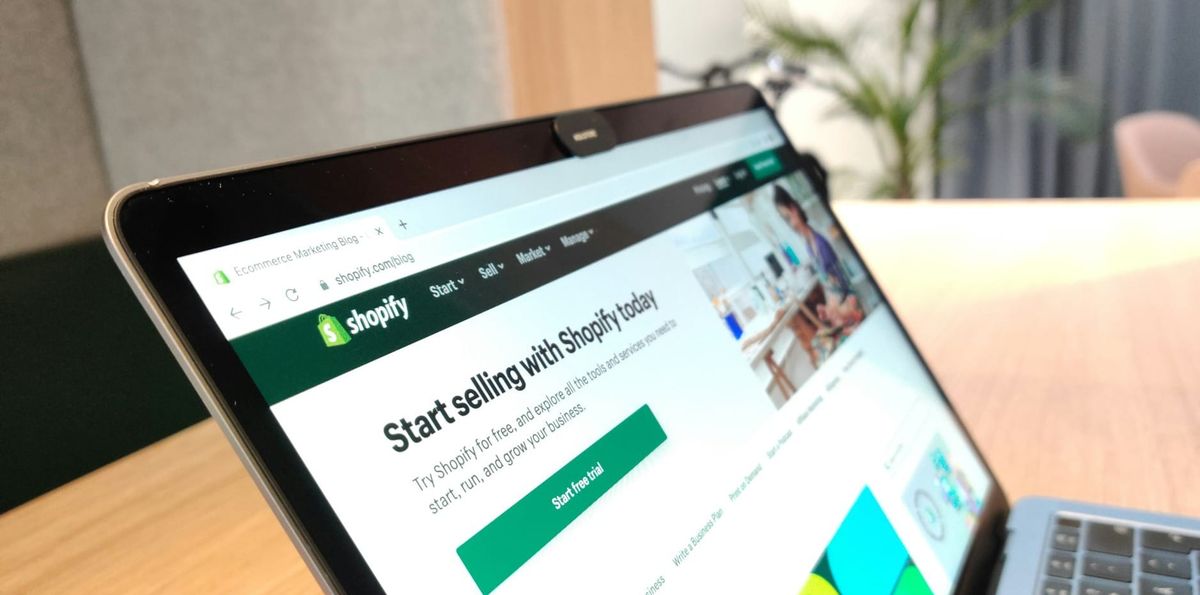
A complete 10-step beginner guide to launching a Shopify store in 2026 —
niche selection, product sourcing, store setup, traffic, and your
realistic path to the first $1,000 in revenue.
Imagine this. On a slow afternoon in early 2024, Sofia — a full-time nurse with zero e-commerce experience — opened a Shopify free trial and spent four hours building a store selling minimalist kitchen organisers. Products she found through a dropshipping supplier in twenty minutes. Her first sale came on day nine.
Month three: $1,200 in revenue. Month six: $3,800 per month — more than a full week of nursing shifts. No technical background. No business degree. Just a laptop, a process, and the patience to follow it through.
This guide is that process. Ten steps, no shortcuts missed.
- →You can launch a Shopify store in 2026 with no tech skills and as little as $39/month.
- →The fastest path to your first $1,000: dropshipping or print-on-demand in a focused niche.
- →Niche stores convert at 2–3× the rate of general stores — specificity is your biggest competitive advantage.
- →65% of shoppers abandon cart when unexpected shipping costs appear — consider free shipping built into pricing.
- →TikTok organic is the fastest free traffic channel for new stores in 2026. One good video can generate dozens of orders.
- →Basic Shopify at $39/month is the right plan for 99% of beginners. Don't upgrade until monthly revenue exceeds $5,000.
Why Shopify for Beginners?
There are dozens of ways to sell products online. Shopify sits at the right intersection: easy to use, professional output, and genuinely scalable. It powers over 4.6 million live stores worldwide and processed more than $235 billion in merchant sales in 2023.
The key difference from marketplaces like Etsy or Amazon: Shopify is your own store. You own the brand, the customer list, and the data. No algorithm can delist your products. No marketplace fee changes can reshape your margins overnight.
The tradeoff: Shopify doesn't come with a built-in buyer audience. You build the traffic. That's the challenge — and the guide below addresses it directly.
📌 What Most Blogs Don't Tell You: Shopify stores that fail almost always fail for one reason — the owner focused on building a perfect store instead of driving traffic. A functional store with consistent traffic beats a beautiful store with none. Build fast, then improve. Never the other way around.
Step 1 — Choose Your Niche
Your niche is the specific corner of the market you're serving. Not "a store that sells everything" — that's not a niche. "Eco-friendly products for dog owners" is a niche. "Minimalist desk accessories for remote workers" is a niche.
A Shopify study found that niche stores convert at 2–3× the rate of general stores. Visitors feel the store was built for them — and that recognition is the gap between browsing and buying.
What makes a good Shopify niche:
- Passionate buyers: Pet owners, fitness enthusiasts, gamers, plant lovers. People who spend based on identity.
- Repeat purchase potential: Consumables, seasonal items, accessories.
- Healthy margin: At least 30–40% gross margin to run paid ads profitably.
- Manageable competition: Not dominated entirely by Amazon and major retailers.
💡 Golden Tip: Search your primary product keyword in the Facebook Ads Library. If you see multiple brands running ads — that's proof of profit, not a reason to avoid the niche. Businesses only run ads on products that make money.
Step 2 — Pick Your Business Model
How products are sourced determines your startup cost, margin, and daily workload.
For beginners, there are two starting paths:
Dropshipping: You list products from a supplier. When a customer orders, the supplier ships directly to them. Zero upfront inventory cost. Margins of 15–30%. Best model to validate demand before committing to inventory.
Print on Demand: You upload designs. A printer (Printful, Printify) produces and ships physical products only when ordered. No inventory. Margins of 35–50%. Best for creative sellers who prefer designing over sourcing.
💡 Golden Tip: Treat your first Shopify store as paid market research. Use dropshipping or POD to validate which products actually sell — then source your best performers directly for higher margins. Most successful independent store owners followed exactly this path.
Steps 3–6 — Set Up Your Store
Step 3 — Start your free trial.
Go to shopify.com and start the 3-day free trial. Shopify regularly offers $1/month for the first three months. Enter an email, choose a store name, and your dashboard is ready. Your myshopify.com URL is permanent — the display name can be changed later.
Step 4 — Configure your settings.
Settings → Store details: fill in your business address, currency, and time zone. Add a custom domain ($14–$16/year). A custom domain immediately legitimises your brand.
Step 5 — Add your products.
For dropshipping: install DSers (free, connects to AliExpress) or Spocket (US/EU suppliers). Products import in minutes. For POD: install Printful or Printify and connect your designs. Write original product descriptions — never copy from suppliers.
Step 6 — Design your storefront.
Go to Online Store → Themes. The free Dawn theme is clean, fast, and professional. Customise your hero image, brand colours, and typography. Launch with 8–12 products. Ten well-presented products outperform 100 half-finished ones every time.
Steps 7–8 — Payments, Shipping & Core Pages
Payments: Enable Shopify Payments under Settings → Payments. Accepts all major cards, Apple Pay, Google Pay, and Shop Pay with no transaction fees (just standard card processing of 2.4–2.9% + 30¢). If Shopify Payments isn't available in your country, add PayPal as a backup.
Shipping: For dropshipping or POD, set your shipping to match supplier rates — or offer free shipping built into your product price. A 2024 Shopify data report found 65% of online shoppers abandon cart when unexpected shipping costs appear. Free shipping with the cost absorbed into pricing consistently lifts conversion.
The 5 core pages every store needs before launch:
- Home — hero section, featured products, trust signals
- About Us — why this store exists, who it's for. Even 100 genuine words increases conversion
- Contact — a form and business email. Buyers check this before purchasing from an unknown brand
- FAQ — answer the 5 most common questions: shipping time, returns, product materials
- Privacy Policy & Terms — Shopify's built-in generator creates these in one click under Settings → Policies
Step 9 — Drive Your First Traffic
A beautiful store with no visitors makes no sales. Traffic strategy is where most beginners struggle — and where most guides are vague. Here's a ranked approach:
1. TikTok organic (fastest free traffic).
TikTok's algorithm shows content to people who don't follow you. A single product demo video can generate thousands of views from a zero-follower account. Formula: problem → product solving it → result. Under 30 seconds.
2. Pinterest (best for long-term free traffic).
Pins have a shelf life of months. Create 5–10 vertical product pins per week. Link directly to product pages. Traffic compounds over time at zero cost.
3. Instagram Reels.
Strong for lifestyle, fashion, beauty, home, and fitness niches. One Reel per day for the first 30 days after launch.
4. Facebook/Instagram paid ads.
Only run after 5–10 organic sales confirm product-market fit. Use your best-performing organic content as your ad creative. Don't spend on ads before organic validation.
5. SEO and blogging.
Add a blog to your store and publish 2–4 SEO-optimised articles per month in your niche. Over 12–18 months this becomes a significant source of free traffic.
🧠 Pivot Insight: Start with one traffic channel and master it before adding a second. The most common beginner mistake is spreading effort across TikTok, Pinterest, Instagram, and Facebook simultaneously — and doing all of them badly. One channel done well beats four done poorly, every time.
Step 10 — Make Your First $1,000
Your first sale checklist:
- Test your checkout yourself using Shopify's Bogus Gateway before launch
- Send your store link to 10 trusted people for honest feedback
- Post your first piece of organic content the day your store goes live
- Email your personal network announcing the store
Key systems for $1 → $1,000:
- Install Facebook Pixel and Google Analytics on day one. You need data from the first visitor.
- Turn on abandoned cart emails. Shopify's built-in automation recovers 10–15% of abandoned carts.
- Add a post-purchase upsell. An app like ReConvert shows an offer on the thank-you page — even 10% acceptance adds 5–15% to average order value with zero extra ad spend.
- Collect emails from day one. A popup offering 10% off for sign-ups. Your email list is the only customer asset you own — no algorithm can take it.
| Plan | Monthly Cost | Transaction Fee | Staff Accounts | Best For |
|---|---|---|---|---|
| Basic Shopify Start here | $39/mo | 2.0% | 2 | Beginners & new stores |
| Shopify | $105/mo | 1.0% | 5 | Growing stores >$5K/mo |
| Advanced Shopify | $399/mo | 0.5% | 15 | Scaling businesses |
| Shopify Starter | $5/mo | 5.0% | — | Social/link selling only |
| Shopify Plus | From $2,300/mo | 0.15% | Unlimited | Enterprise brands |
Mistakes to Avoid
Choosing a niche you like instead of one the market wants. Validate demand with data before building.
Launching with too many products. 10 well-presented products outperform 100 half-finished ones. Launch lean, then expand.
Skipping the mobile checkout test. Over 70% of e-commerce traffic is mobile. A broken iPhone checkout costs you most of your potential buyers.
Using supplier product descriptions word-for-word. Duplicate content hurts SEO and fails to differentiate your store. Rewrite everything in your brand voice.
Running paid ads before organic validation. Get 10 organic orders first. Then run ads to amplify what's working.
Ignoring email capture. Every visitor who leaves without an email is a lost customer. A 10%-off exit popup captures 3–8% of visitors.
Quitting too early. Most beginners who fail do so in weeks 2–4, just before traction appears. The stores that succeed are more patient, not more talented.
AI Tools for Your Shopify Store
- Product descriptions: Claude or ChatGPT drafts compelling SEO-optimised copy in minutes. Saves 2–4 hours per batch of products.
- Product images: Canva AI creates lifestyle mockups and ad creatives without a photographer.
- Niche research: Semrush validates keyword demand before you invest time in any product category.
- Email sequences: Use AI to pre-write your welcome sequence, abandoned cart emails, and post-purchase follow-ups. Set once, run forever.
| Channel | Cost | Time to Results | Best For |
|---|---|---|---|
| TikTok Organic | Free | Days–weeks | Any product with visual appeal. Fastest zero-cost reach. |
| Free | Weeks–months | Home, fashion, beauty, gifts. Pins compound over months. | |
| Instagram Reels | Free | Weeks | Lifestyle, fashion, fitness niches. Strong visual content. |
| Facebook/Meta Ads | $10–$30/day | Days | After organic validation. Use best organic content as ad creative. |
| SEO & Blogging | Free | 6–18 months | Long-term passive traffic. Best investment after store is profitable. |
| Your Situation | Recommendation |
|---|---|
| You want your own brand, not a marketplace | ✓ Shopify. You own the store, customer list, and data. |
| You have $39/month and 5 hours/week | ✓ Shopify + Dropshipping. Lowest commitment to test if e-commerce suits you. |
| You want to sell on a marketplace with built-in buyers | → Consider Etsy or Amazon first. Marketplaces send traffic; Shopify requires you to build it. |
| You want to scale to $10K+/month eventually | ✓ Shopify. Strongest platform for brand building and long-term scaling. |
| You have under $100 total budget | → Start with Etsy digital products. Zero platform cost, zero product cost. Validate income first. |
| You're running a side hustle alongside a full-time job | ✓ Shopify + POD. No daily fulfilment. Manageable in 5–10 hours/week. |
"The most common reason Shopify stores fail is not the product, the niche, or the platform. It's that the owner spent six weeks perfecting the store design before driving a single visitor."
Sofia's store was built in four hours — not because she was careless, but because she understood that a functional store with traffic is worth infinitely more than a perfect store with none. The Shopify stores that reach $1,000 in their first 90 days share one characteristic: the owner got the store live fast, started driving organic traffic immediately, and improved the design based on what real visitors actually did. Ship, learn, improve — in that order.
Frequently Asked Questions
How much does it cost to start a Shopify store in 2026?
The minimum is $39/month for Basic Shopify plus $14–$16/year for a domain. With dropshipping or POD, there are zero upfront product costs. Your first month can cost under $55.
Do I need technical skills to build a Shopify store?
None at all. Shopify's drag-and-drop editor requires zero coding. If you can use Gmail and upload a photo, you have the skills needed.
How long does it take to make the first $1,000?
With consistent TikTok or Pinterest content and a validated niche, most beginners hit $1,000 in revenue within 30–90 days. Organic first, paid second is the safer path.
Is dropshipping still profitable in 2026?
Yes — but generic dropshipping stores selling the same AliExpress products as thousands of competitors are struggling. Branded stores in focused niches with original photography and strong content remain profitable.
What's the best Shopify plan for beginners?
Basic Shopify ($39/month) for 99% of beginners. Upgrade to the $105/month plan only when monthly revenue consistently exceeds $5,000–$6,000.
Can I run a Shopify store as a side hustle?
Yes — most successful beginners start this way. Choose dropshipping or POD for zero daily fulfilment work. Automate abandoned cart emails and you can run a Shopify store in 5–10 hours per week.